
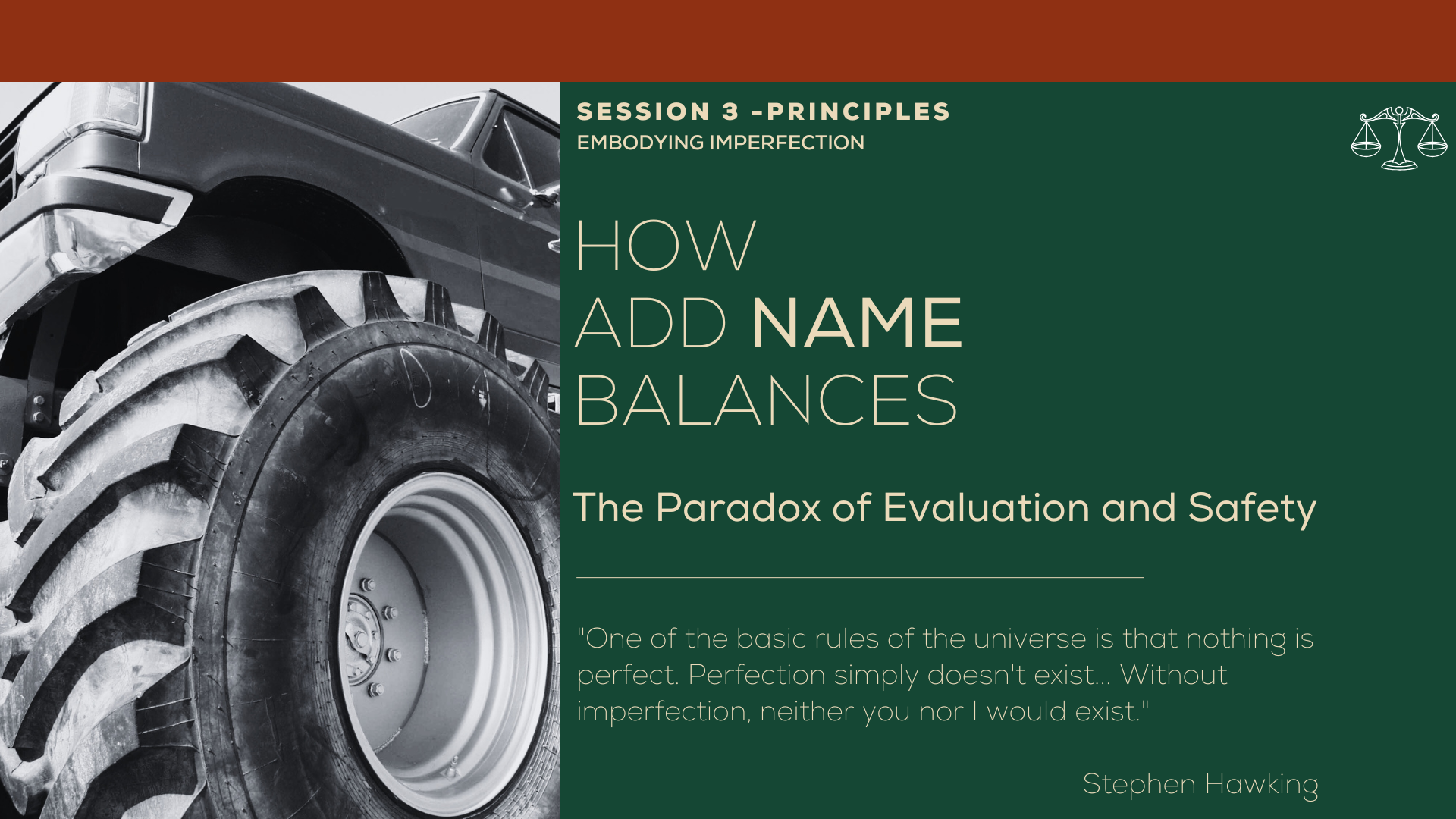
MY CULTURE 3
You practice not to achieve peace, but a ceasefire. In conflict, it is rarely possible to find permanent peace — but rather an enduring ceasefire.
SESSION THREE — IMPERFECTION
This is a link to the ‘Principles’ tutorial video - ‘My Culture - Session 3 - Principles’
Alongside the Principes video, I have included the ‘Activation Narrative’ that is part of this session in the self-guided workbooks. The stories I tell aren’t comfortable, nor are they trauma porn. They are designed to elicit a specific response from the reader, tied to the topic our clients are working on in this session.
The Third Red Rule:
“Perfect isn’t possible if you also want to have trust.”
― Robert (Sherpa) Millar
“Can we just have the magic without the mayhem?” There was anguish in his voice, as well as frustration and a feeling of futility. I was his pastor, as well as his friend; he was an American I had gotten to know pretty well. He was a high-level executive in a Fortune 100 company. He had come to trust me, to see me as his mentor; he called me his rabbi, mainly as a joke, but also as a way to express the impact our relationship had on his life. But certain habits in my life were starting to wear thin. He was used to people acting in a certain way. It was seriously jeopardizing our relationship, and I knew that if I didn’t take action, it would negatively impact his trust in me. I also knew if that happened, I’d resent it and pull back, less willing to be open with him.
You might be wondering what habits irritated him so much. Well, you see, I tend to talk a lot and can be pretty intense. When I drop my guard and stop monitoring and managing how much I talk and how intensely others experience my energy, I will reliably end up talking too much and being too intense for some people. This tends to cause a conflict after it happens a few times.
You see, the problem is that the same people whom I trusted to be unguarded with, also have the benefit of time to get to know me and my story. They know I am a gifted wordsmith and trained to deal with intensely difficult situations like walking into a psych ward to visit a church member who is under a 72-hour enforced hospitalization order, or being the pastor at a deathbed, or helping to de-escalate a potentially dangerous situation. It doesn’t take long before people begin to hear the stories of terrorists, drug dealers, and the other apex predators I’ve spent a lifetime talking to and earning their trust. How could someone with this background not be able to follow the basic rule of thumb that if there are two people in a conversation, they should talk less than 50% of the time?
When I was young, I was beaten and threatened with physical harm on almost a daily basis for talking too much or being too much for the adults and older kids in my world. As I got older, I have literally talked myself into life-threatening experiences in places that are even more dangerous than where I grew up. No amount of effort or negative consequence has fixed the problem, because these are biographical imperfections. If I drop my guard around you, then you will experience who I am, and I am imperfect. What has always bemused me when other people are berating me for my biographical imperfections is their utter lack of awareness that they, too, are imperfect when unguarded. Every top leader I have met knows perfection isn’t possible.
In the next post, we'll explore the first vehicle you'll learn to drive—Delight—and how it allows you to travel between Recognition and Creativity without losing your home.
THIS IS NOT TRAINING. IT'S CALIBRATION.
Self-guided workbooks: $297 | Live coaching: $10,000 per series
They call me 'Sherpa' because I help people get to where they want to go. I can't promise you will have all your fingers and toes when you reach your summit. But you'll achieve it. If you're looking for easy, this isn't it. If you want transformation, start here: Sherpa Intro Tree — Bespoke Compass
— Robert (Sherpa) Millar | Bespoke Compass
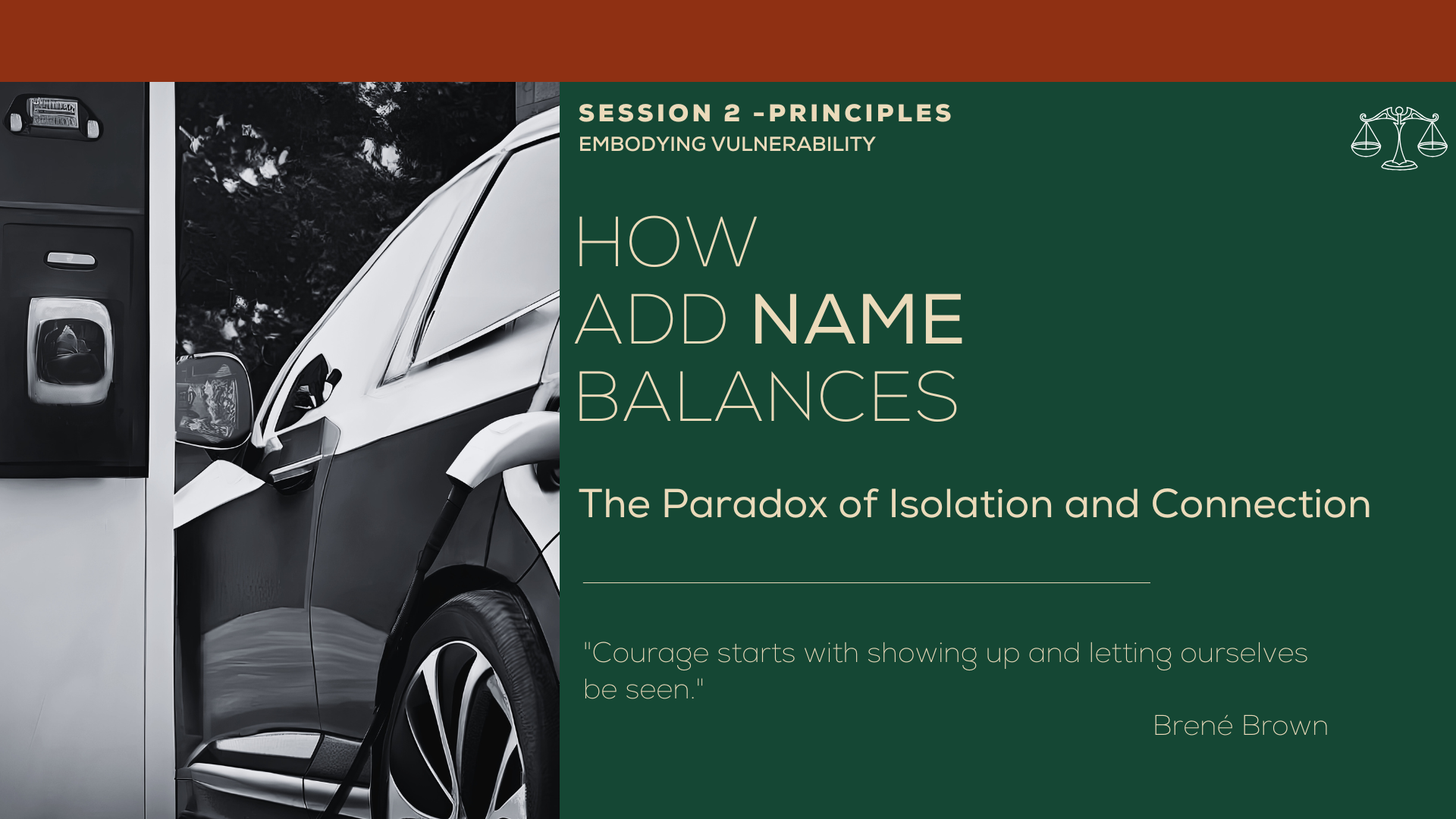
MY CULTURE 2
You practice not to achieve peace, but a ceasefire. In conflict, it is rarely possible to find permanent peace — but rather an enduring ceasefire.
SESSION TWO — VULNERABILITY
This is a link to the ‘Principles’ tutorial video - ‘My Culture - Session 2 - Principles’
Alongside the Principes video, I have included the ‘Activation Narrative’ that is part of this session in the self-guided workbooks. The stories I tell aren’t comfortable, nor are they trauma porn. They are designed to elicit a specific response from the reader, tied to the topic our clients are working on in this session.
The Second Red Rule:
“Treat people the way you want to be treated, is a warning label, not a bumper sticker.”
― Robert (Sherpa) Millar
The country road outside my grandmother’s cottage was packed for half a mile in either direction with men from every walk of life Ireland had to offer. In that crowd of humanity, military personnel, and police officers —both active duty and retired — rubbed shoulders with protestant paramilitaries, who were standing beside Catholics, alongside landowners, talking to farm laborers, all in their Sunday best, to pay respects to my grandmother, Sarah Gilchrist. She had twelve children and 54 grandchildren, as well as numerous great-grandchildren, by the end of her life. I was sixteen, and Sarah was my maternal grandmother. She had been the only grandparent we had known, and despite the unorthodox nature of my childhood, I was grieving her loss. I was stuck in the middle of the crowd and getting seriously stressed, for it was almost time for the procession to the graveside.
Her daughters, daughters-in-law, her granddaughters, and great-granddaughters had already said goodbye to her inside the cottage. Alongside this host of female relatives was an equally broad cross-section of Irish female society. All of them were standing inside, or just outside the cottage in the garden.
It was 1987, and in our part of Ireland, we still kept to the old ways. Women weren’t permitted to go to the graveside for fear their tears would upset the recently departed and cause them to return in sympathy and haunt the living. So, the crowd getting ready to carry Sarah to her grave was all men and boys. We each step forward to do a carry, a set amount of steps, while the other mourners walk behind in silence. In Ireland, at that time, boys were taught not to cry from a very early age. At one point during my turn at the ‘lift’, I almost shamed the entire family by spilling a few silent tears. My Dad gave me a rough glare, my brothers a panicked look, and then the full weight of five thousand years of Irish ancestors stiffened my spine, and I made it through the rest of the service without a single tear. It took another eight years before I cried again. By then, I had undergone a radical spiritual transformation and met healthier individuals who encouraged me to embrace vulnerability. At 24, when I first wept in a church service, it was physically painful. I have lost count of the times senior leaders in dozens of fields shared similar stories of being trained to control their emotions from an early age.
Like all the activation narratives, this actually happened, and it will stimulate a subconscious response as you read it. Some of you will likely relate to my story, while others may find it truly unthinkable, wherever you find yourself coming from as you read this, “welcome to session two of My Culture. Here you will add two ways you access vulnerability to locate and relate to Isolation and Connection.”
In the next post, we'll explore the first vehicle you'll learn to drive—Imperfection—and how it allows you to travel between Evaluation and Safety without losing your home.
THIS IS NOT TRAINING. IT'S CALIBRATION.
Self-guided workbooks: $297 | Live coaching: $10,000 per series
They call me 'Sherpa' because I help people get to where they want to go. I can't promise you will have all your fingers and toes when you reach your summit. But you'll achieve it. If you're looking for easy, this isn't it. If you want transformation, start here: Sherpa Intro Tree — Bespoke Compass
— Robert (Sherpa) Millar | Bespoke Compass
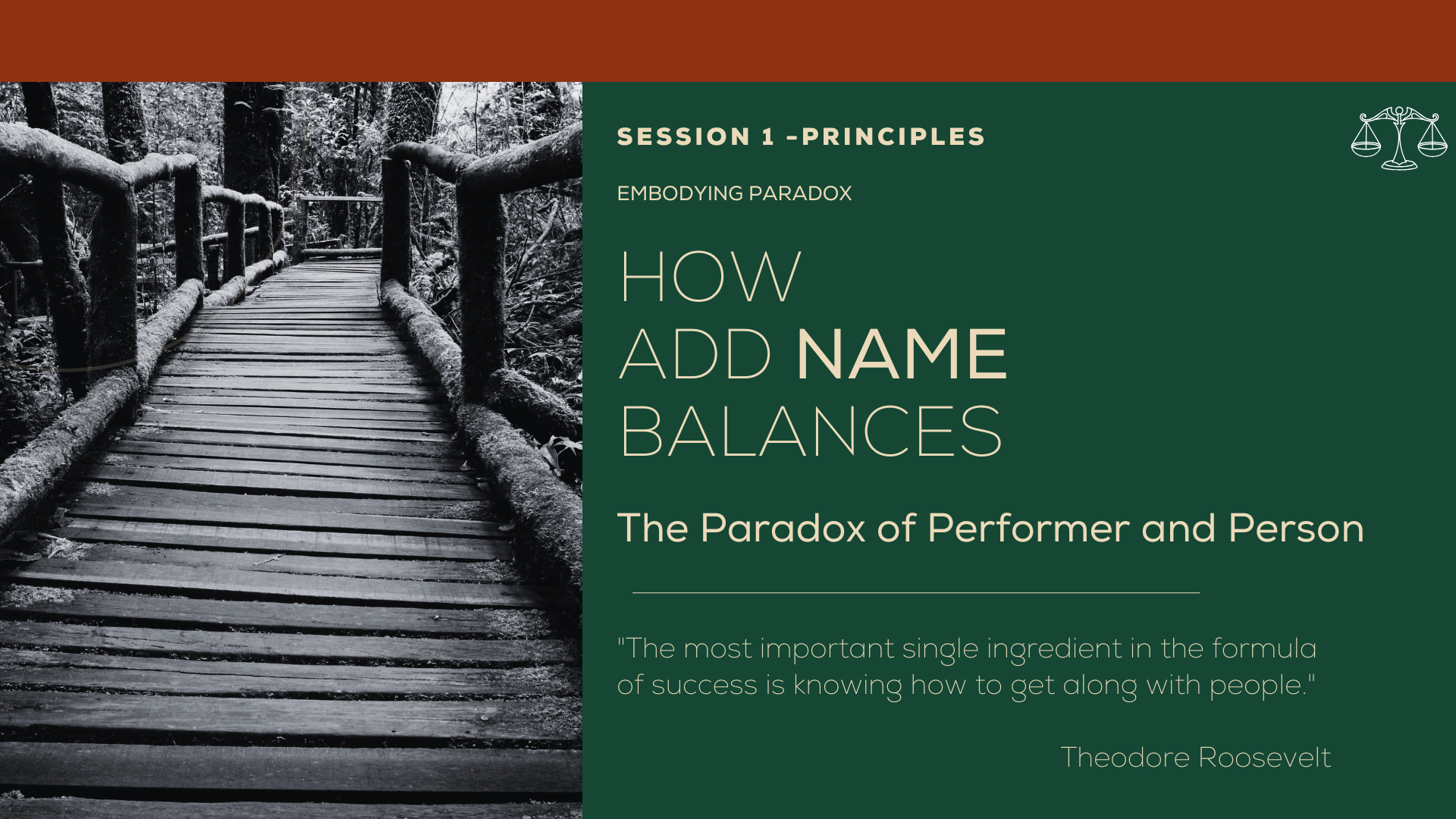
MY CULTURE 1
You practice not to achieve peace, but a ceasefire. In conflict, it is rarely possible to find permanent peace — but rather an enduring ceasefire.
SESSION ONE — THE PARADOX OF PERFORMER AND PERSON
This is a link to the ‘Principles’ tutorial video - ‘My Culture - Session 1 - Principles’
Alongside the Principes video, I have included the ‘Activation Narrative’ that is part of this session in the self-guided workbooks. The stories I tell aren’t comfortable, nor are they trauma porn. They are designed to elicit a specific response from the reader, tied to the topic our clients are working on in this session.
The First Red Rule:
“In my experience, you cannot cohabit both places. You either live for connection or you're living for success — and most conflicts come from not knowing which world the other person inhabits.
― Robert (Sherpa) Millar
Bill gestured for me to follow him out of the room. He didn’t look happy with me. Bill was a retired cop from New York City who was now a senior V.P. in the mission organization where I worked. We had been in a workshop with a couple of hundred other staff when he pulled me out of the meeting. He sat me down on the stairs outside the conference room, out of sight of everyone, and began to explain how my attitude, actions, and words during the conversation were perceived as offensive and intimidating to many of the other staff members. I was both shocked and offended! I respected Bill for the way he carried himself, the choices he made, and the successes he had achieved. So, having him drop the hammer out of the blue was a shock. I looked at him and passionately defended myself by saying, “I am a pacifist, I am the gentlest person I know!” Bill laughed in my face, then slapped me on the back, and said, “You almost intimidate me when you explain how gentle you are!” I was crushed, he was serious, and I was frustrated. Honestly, my usual reaction was to shrug and think, “Poor little snowflakes were getting their feelings hurt, how’s that my fault?”
Just for the sake of my ego, let me insert a wee disclaimer at this point. At 35, I had over a decade of leadership experience and successes on two continents under my belt, and had been regarded as a spiritual leader and teacher for years. In short, I was very proud of my humility. But Bill was no snowflake; he’d grown up on the streets of New York, had escaped the gravitational pull of systemic poverty and violence, become a police officer, then a minister, and now helped lead a global mission organization. Bill was one of my inspirations. He had worked hard, he never gave up, and he didn’t whine about life being unfair. He just got up and made it work. Now here he was, telling me to dial it back and make the effort to understand where the bulk of the room was coming from.
Bill inhabited the intrinsic world of connection and safety. I inhabited the extrinsic world of evaluation and competition. When I evaluated ideas harshly, Bill perceived it as an attack on our connection. I had no idea I was crossing a red line into his world. It took years of effort, but I learned to travel to that intrinsic world and both locate and relate to the mindset of that place. If my description of snowflakes offended you, please be aware that I was describing an event that occurred almost twenty years ago. That experience helped me create this program.
Every conflict is a collision between two incompatible worlds: the world of doing (Extrinsic) and the world of being (Intrinsic). You inhabit one. The other doesn't make sense to you.
In the next post, we'll explore the first vehicle you'll learn to drive—Vulnerability—and how it allows you to travel between Isolation and Connection without losing your home.
THIS IS NOT TRAINING. IT'S CALIBRATION.
Self-guided workbooks: $297 | Live coaching: $10,000 per series
They call me 'Sherpa' because I help people get to where they want to go. I can't promise you will have all your fingers and toes when you reach your summit. But you'll achieve it. If you're looking for easy, this isn't it. If you want transformation, start here: Sherpa Intro Tree — Bespoke Compass
— Robert (Sherpa) Millar | Bespoke Compass
MY CULTURE - Intro
You practice not to achieve peace, but a ceasefire. In conflict, it is rarely possible to find permanent peace — but rather an enduring ceasefire.
MY CULTURE — THE RED CONFLICT
This is a link to the ‘Principles’ tutorial video - ‘My Culture - An Introduction.’
Alongside the Principes video, I have included the ‘Activation Narrative’ that is part of this session in the self-guided workbooks. The stories I tell aren’t comfortable, nor are they trauma porn. They are designed to elicit a specific response from the reader, tied to the topic our clients are working on in this session.
All of our programs operate within a metaphor. This is part of the initial activation methodology. My Culture, the metaphor is centered on traveling between two paradoxical locations. Through five sessions, you'll learn to navigate between the Extrinsic and Intrinsic Home-mindsets. This capacity to travel to the ‘other’ gives you the power to negotiate conflict. This isn't about choosing between an Extrinsic or Intrinsic mindset—it's about embodying both simultaneously, in every negotiation you face.
NEGOTIATING INSTINCTIVE CONFLICT
My Culture is the second of three programs in My Success, expanding your awareness to see what's coming and counter blind reactions. Organizations demand performance. Humans need health. Most leaders sacrifice one for the other, never recognizing they're negotiating with a paradox, not solving a problem.
You already balance this tension instinctively. The question is, can you do it intentionally?
The paradox of Performer vs Person - Home-mindsets - Doing ↔ Being
Embodying Vulnerability - E.V. - Isolation ↔ Connection
Embodying Imperfection - Monster Truck - Evaluation ↔ Safety
Embodying Delight - Clown Car - Recognition ↔ Creativity
Embodying Grounding - Subaru - Competition ↔ Stability
These aren't opposing forces to reconcile. They're permanent tensions to navigate. Most leaders oscillate between them, depending on the environment. You're about to learn to hold both simultaneously—and lead from that center point.
The Red Zone: notice the color. Red runs through all the material—banners, borders, every visual element. In My Leadership, you worked with yellow, the color of choice. Now we're in red, the color of conflict. This is how you instinctively handle conflict. You have subconscious categories that determine how you negotiate with others. The problem is that conflict often arises unintentionally because you do not know how to locate and relate to the Other.
We inhabit paradoxical places, and we do not share the same values. We admit we do not understand each other. And that's where the conflict lives.
Performer or Person: You Can't Be Both
Many paradoxes cause conflict, but we're starting with one that's both safe and professional: the distinction between extrinsic and intrinsic orientation.
Some of us really value intrinsic. This is about being a healthy person, achieving well-being. This is the Person who values Connection, Safety, Creativity, and Stability—the intrinsic sequence. The rest of us—and I'm one of them—really value extrinsic. This is about being a successful Performer, achieving success through organized effort. We value Isolation, Evaluation, Recognition, and Competition—the extrinsic sequence. You're not ambidextrous. You live in one place. You have a home mindset. At best, you can travel to meet and connect with others. You won't find peace. You won't make converts. But you can negotiate a ceasefire. If you're phenomenally talented, you can create a demilitarized zone where you refrain from launching attacks against the Other. This is about the ceasefire. At best, a demilitarized zone. It's not about peace what you’re building. The ideas in this program surface the conflict you already live with daily. They replicate the stimulus-and-reflection rhythm of our live programs, allowing you to experience the tension before analyzing it. This is not training. It's calibration. The outcome isn't balance—it's the ability to stay upright under fire. What you're building: The discipline to see another's point of view while retaining a firm grip on your own. The capacity to cross red lines without losing yourself.
We're going to dig deep into the red zone of conflict and learn how to negotiate with the Other.
In the next post, we'll explore the two locations that create the paradox of Performer vs Person – we will visit both Home-mindsets, one focused on Doing, the other Being.
THIS IS NOT TRAINING. IT'S CALIBRATION.
Self-guided workbooks: $297 | Live coaching: $10,000 per series
They call me 'Sherpa' because I help people get to where they want to go. I can't promise you will have all your fingers and toes when you reach your summit. But you'll achieve it. If you're looking for easy, this isn't it. If you want transformation, start here: Sherpa Intro Tree — Bespoke Compass
— Robert (Sherpa) Millar | Bespoke Compass

MY LEADERSHIP - 5
Fast is the default, but flow comes through discipline—where awareness and instinct move as one. The military has a term, known as the Kill Chain: from Sensor to Shooter. Instinctive leaders have their own 'Kill Chain: Sight to Success.' Like the military version, speed matters—but so does accuracy at each step. Can you see it clearly enough to exploit it?"
SESSION FIVE — THE DIRECTION
This is a link to the ‘Principles’ tutorial video - ‘My Leadership - Session 5 - Principles’
Alongside the Principes video, I have included the ‘Activation Narrative’ that is part of this session in the self-guided workbooks. The stories I tell aren’t comfortable, nor are they trauma porn. They are designed to elicit a specific response from the reader, tied to the topic our clients are working on in this session.
The Fifth Golden Rule:
“Being aware of impact is the point; how you react to stress is just a catalyst.”
― Robert (Sherpa) Millar
The first thing Jermaine Andre said to me the first time we met was, “You are the most dangerous guy in the room!” I was taken aback, then a bit offended, and finally intrigued. I replied, “Hardly, I am a pacifist.” Later that day, he texted me a quote about pacifism requiring the person to have first mastered violence. From there, we became friends. A little later, Jermaine signed up to certify as one of our coaches. I don’t think either of us ever believed Jermaine would spend any time sitting at a desk talking to clients as a Bespoke Compass coach. However, we both thought it would be a fun way to hang out and learn something, so Jermaine successfully became one of our coaches. As we suspected, he has never actually worked as one of our coaches since receiving his certification.
Let me provide some context for Jermaine’s unusual choice of introduction when we first met. Jermaine is a two-time world champion, a five-time American champion, and a Hall of Fame inductee as a distinguished MMA fighter. He has generously trained my son in MMA, and is someone I respect, like, and am honored to call a friend. All of that is memorable, but it wouldn’t be enough to warrant its inclusion as the Activation Narrative for session five. It was included because of what he said to me when he went through session five for the first time as a client. “Sherpa, you are talking about Bam-Bam!” My response? “What are you talking about? Who or what is a Bam-Bam?” Jermaine laughed and expanded on the origin of Bam-Bam. You see, when Jermaine was busy collecting all of those titles I listed earlier, he had to climb into the ring and fight other men who were hoping to smash him to a pulp and take those titles for themselves. Jermaine’s manager would not allow him into the ring until he was satisfied that Jermaine had given control over to Bam-Bam, the internal ‘voice’ mindset Jermaine activated before each fight. Bam-Bam could handle the intense stress of world champion fights better than any other part of Jermaine’s psyche, and so the manager needed to be sure Jermaine was mentally ready before he got into the ring. While you and I aren’t climbing into the ring to defend our world champion status as MMA fighters, we have developed an inner voice/mindset to handle the stress that inevitably comes with leadership. Ever since Jermain completed session five of this program, that inner voice/mindset has been referred to as the Bam-Bam voice. In this session, we will aim to activate your Bam-Bam and explore how it impacts others while you are in this state by naming your stress profile.
In the next post, we'll explore the introduction to the paradox of Extrinsic/Intrinsic conflict in My Culture.
THIS IS NOT TRAINING. IT'S CALIBRATION.
Self-guided workbooks: $297 | Live coaching: $10,000 per series
They call me 'Sherpa' because I help people get to where they want to go. I can't promise you will have all your fingers and toes when you reach your summit. But you'll achieve it. If you're looking for easy, this isn't it. If you want transformation, start here: Sherpa Intro Tree — Bespoke Compass
— Robert (Sherpa) Millar | Bespoke Compass

MY LEADERSHIP - 4
Fast is the default, but flow comes through discipline—where awareness and instinct move as one. The military has a term, known as the Kill Chain: from Sensor to Shooter. Instinctive leaders have their own 'Kill Chain: Sight to Success.' Like the military version, speed matters—but so does accuracy at each step. Can you see it clearly enough to exploit it?"
SESSION FOUR — THE HARNESS
This is a link to the ‘Principles’ tutorial video - ‘My Leadership - Session 4 - Principles’
Alongside the Principes video, I have included the ‘Activation Narrative’ that is part of this session in the self-guided workbooks. The stories I tell aren’t comfortable, nor are they trauma porn. They are designed to elicit a specific response from the reader, tied to the topic our clients are working on in this session.
The Fourth Golden Rule:
“No one intentionally acts inappropriately; they always have an instinctive justification.”
― Robert (Sherpa) Millar
“I would shoot right through a baby to kill a catholic.” The room went still. The men in the room looked at the speaker, then at each other, nodded, and finally glanced at me to see my reaction to this succinct explanation of their dedication to the Cause. I was in a house that belonged to the local commander of one of the Protestant terrorist organizations in Northern Ireland. In the early years of my spiritual leadership, I found myself working with these loyalist paramilitary groups, and they were trying to impress me with their discipline and dedication. A couple of weeks later, I was in the same house, where that spokesman was lying unconscious and bleeding, with his older brother standing over him. He had run afoul of the organization’s rules, and his brother had been sent to teach him that those rules weren’t optional. These young men had the power of life and death over entire communities, and my job was to lead them in exploring and expanding their understanding of power.
Fast forward a few years, and I was living in Germany, on a trip to America to a billionaire’s rural retreat with a group of multimillionaires. It was a weekend fundraiser, and my wife and I were there as full-time foreign missionaries. These individuals had achieved extraordinary levels of success in their fields and had amassed an equally impressive amount of personal wealth. Our job was to lead them in exploring and expanding their understanding of wealth.
Fast forward one more time, and I now live in America. It was 2016, and I had just resigned as a pastor of a large church in the Midwest, marking the first step in my decision to end a 25-year vocation as a spiritual leader. I had burned myself out trying to lead people who wanted to stay comfortable. They didn’t ask to be challenged; they didn’t really need a leader like me. In hindsight, my approach to leading them was wildly inappropriate for most of them.
My approach to all three groups was the same. You see, I have only one instinctive approach as a leader. It is aggressive, uncomfortable, and relentless. I am subconsciously optimized to work with people who live in extreme environments. So, if you make me a local pastor in the Midwest, I inevitably struggle to be effective in leading and will eventually fail.
In the next post, we'll explore the final link in what we call our instinctive Leadership Kill Chain— the unintentional impact on others when we are reacting to stress.
THIS IS NOT TRAINING. IT'S CALIBRATION.
Self-guided workbooks: $297 | Live coaching: $10,000 per series
They call me 'Sherpa' because I help people get to where they want to go. I can't promise you will have all your fingers and toes when you reach your summit. But you'll achieve it. If you're looking for easy, this isn't it. If you want transformation, start here: Sherpa Intro Tree — Bespoke Compass
— Robert (Sherpa) Millar | Bespoke Compass

MY LEADERSHIP - 3
Fast is the default, but flow comes through discipline—where awareness and instinct move as one. The military has a term, known as the Kill Chain: from Sensor to Shooter. Instinctive leaders have their own 'Kill Chain: Sight to Success.' Like the military version, speed matters—but so does accuracy at each step. Can you see it clearly enough to exploit it?"
SESSION THREE — THE ROPE
This is a link to the ‘Principles’ tutorial video - ‘My Leadership - Session 3 - Principles’
Alongside the Principes video, I have included the ‘Activation Narrative’ that is part of this session in the self-guided workbooks. The stories I tell aren’t comfortable, nor are they trauma porn. They are designed to elicit a specific response from the reader, tied to the topic our clients are working on in this session.
The Third Golden Rule:
"In my experience, after a terrible decision, most people autopsy the decision-making process, rather than the decision-making environment."
― Robert (Sherpa) Millar
One of the oddities of living in a high-risk environment for too long is that it often creates a skewed perception of risk. I was no exception. I have always loved to climb things, and after I got sober, I found myself in the mountains and sea cliffs of Ireland, where we did free soloing, not because we were advanced rock climbers, but because we had never seen climbing gear. From Ireland, I graduated to the Alps. Climbing and hiking in the mountains should be done with care, the right equipment, and proper planning. We decided to hike and climb without any of these safety elements. Once with another Irishman, I found myself lost in the Swiss Alps. We had climbed for several hours in dense clouds and rough terrain, losing the path to the summit we were aiming for that day. After another hour of fruitless hiking, we were starting to get worried. Visibility was atrocious; climbing through clouds for that long had saturated even the Gore-Tex. Just as we were beginning to wonder how to extricate ourselves, the sun broke through, and out of the mist came this ancient farmer with a sheepdog. Between my limited German and his limited English, he helped reset our path, and eventually we made it to the summit and back to base camp with only sore feet and exhaustion. The bizarre thing was that he was so high in the mountains, and then, when we said goodbye and started on the route he had pointed out, the strangeness increased. We had only taken a dozen steps, looked back to shout thanks, and he and the dog were gone! It was surreal, visibility was still good, we could see for miles, but they were gone! To this day, it remains one of the strangest things that has happened to me. Did an angel show up and help us? Was it an optical illusion or a dip in the terrain? Who knows, but I like to think that my ancestors sent a shepherd to rectify what could have been a terminally bad decision. Why the trip down memory lane to my wild younger years? It is all about the reason I was making one dumb decision after another. You see, without realizing it, I had developed a subconscious category for what environmental conditions I needed to make good decisions. Like my Biases, what those two conditions are isn’t relevant, so moving on. I obviously ran out of rope in the climbing metaphor. I made one bad decision after another due to the environment, as much as it was the trauma-induced risk-taking tendencies.
As you were developing a way to build this third level of the tower of wooden blocks, you stumbled upon a winning solution, which was affirmed by your Authority, who was helping you learn to lead. So, then you coded the things you noticed when you made those significant decisions. Hey presto! You created a subconscious category that ‘knows’ exactly what you need to make good decisions. The problem is that knowledge then became coded, and your subconscious couldn’t make good decisions without those conditions.
In the next post, we'll explore the fourth link in what we call our instinctive Leadership Kill Chain—how you instinctively act.
THIS IS NOT TRAINING. IT'S CALIBRATION.
Self-guided workbooks: $297 | Live coaching: $10,000 per series
They call me 'Sherpa' because I help people get to where they want to go. I can't promise you will have all your fingers and toes when you reach your summit. But you'll achieve it. If you're looking for easy, this isn't it. If you want a transformation start here: Sherpa Intro Tree — Bespoke Compass
— Robert (Sherpa) Millar | Bespoke Compass

MY LEADERSHIP - 2
Fast is the default, but flow comes through discipline—where awareness and instinct move as one. The military has a term, known as the Kill Chain: from Sensor to Shooter. Instinctive leaders have their own 'Kill Chain: Sight to Success.' Like the military version, speed matters—but so does accuracy at each step. Can you see it clearly enough to exploit it?"
SESSION TWO — THE ANCHOR POINT
This is a link to the ‘Principles’ tutorial video - ‘My Leadership - Session 2 - Principles’
Alongside the Principes video, I have included the ‘Activation Narrative’ that is part of this session in the self-guided workbooks. The stories I tell aren’t comfortable, nor are they trauma porn. They are designed to elicit a specific response from the reader, tied to the topic our clients are working on in this session.
The Second Golden Rule:
“Bias is a good thing, but ignorance often means your assessment isn’t always aligned with what you are selecting for.”
― Robert (Sherpa) Millar
It is October 2025, and my son is eleven years old. He has chores and occasionally does yard work for us and a neighbor, but most of his days are spent with friends, having fun, playing sports, and playing video games—the typical idyllic life of a middle-class kid in a safe neighborhood. It's a stark contrast to me at eleven. I started working at a very early age, and by eleven, I’d learned many tough lessons about who to team up with to get things done. Every year at harvest time, we’d jump on the farmer’s trailer and hitch a lift to the fields to gather potatoes. It is back-breaking work, and how much you got paid depended on how many bags of potatoes you gathered that day. That amount depended on a few variables, but the key was to be given as large a slice of the drill as possible without holding up the tractor. Additionally, being alongside the right people was crucial, as they could slow the tractor, thereby limiting the number of drills that got plowed that day. I graduated from the fields into sales in my teens, then to manual labor at 16.
Over time, I left my working-class roots far behind and have earned my livelihood in the white-collar world for more than half of my life. However, my leadership sequence began to take shape in those fields, and I realized that how much you could earn was directly tied to how much you produced, which created subjective biases in my assessment process. As I grew older and began leading teams, these selection biases became my default tools for evaluating any potential resource tied to an extrinsic goal. I still instinctively want to see two things when I make an assessment. What those are is irrelevant to this exercise and will only distract you when you enter the profile section and work on feeling your own top two biases. Suffice it to say, those two biases, along with all the other lesser biases I have coded in my sequence, have only gotten stronger as the years have passed.
You will need to take the next step up the wall, attaching your core anchor points. Like session one, this will probably still feel uncomfortable for many of you. I have never met an instinctive leader who lacks anchor points. I created this program and have worked with individuals from over 30 nationalities, representing all genders, generations, and industries. I have always been able to stimulate a reaction when attempting to trigger one while looking for subconscious bias. So, you, too, have these avatars of virtue that secure you to every goal you set for yourself as a leader. Remember, you must ‘feel’ your way to an expanded awareness of your subjective, fast-thinking biases in assessment, before you can think about that expanded awareness.
In the next post, we'll explore the third link in what we call our instinctive Leadership Kill Chain—the decision-making environment.
THIS IS NOT TRAINING. IT'S CALIBRATION.
Self-guided workbooks: $297 | Live coaching: $10,000 per series
They call me 'Sherpa' because I help people get to where they want to go. I can't promise you will have all your fingers and toes when you reach your summit. But you'll achieve it. If you're looking for easy, this isn't it. If you want transformation start here: Sherpa Intro Tree — Bespoke Compass
— Robert (Sherpa) Millar | Bespoke Compass

MY LEADERSHIP - 1
Fast is the default, but flow comes through discipline—where awareness and instinct move as one. The military has a term, known as the Kill Chain: from Sensor to Shooter. Instinctive leaders have their own 'Kill Chain: Sight to Success.' Like the military version, speed matters—but so does accuracy at each step. Can you see it clearly enough to exploit it?"
SESSION ONE — THE WALL - the Instinctive question
This is a link to the ‘Principles’ tutorial video - ‘My Leadership - Session 1 - Principles’
Alongside the Principes video, I have included the ‘Activation Narrative’ that is part of this session in the self-guided workbooks. The stories I tell aren’t comfortable, nor are they trauma porn. They are designed to elicit a specific response from the reader, tied to the topic our clients are working on in this session.
The First Golden Rule:
“You cannot know the future, but we can see just around the corner by following the pattern.”
― Robert (Sherpa) Millar
I was born in Northern Ireland on January 5th, 1971, at the beginning of a thirty-year war that we now call The Troubles. I developed my instinctive leadership sequence in the day-to-day survival caused by systemic poverty and violence. There wasn’t time to read the manual or calculate the best solution for the dangerous situations I found myself in. I needed to act —and act fast — if I was to ensure we got through the latest nightmare. Very few of the experiences that littered my childhood and early adulthood could be predicted or planned for. From an early age, I tended to feel responsible for others, which meant I needed to develop a subconscious sequence of steps that let me think on my feet as a young leader. My goals in those early years tended to be low on Maslow's Hierarchy of Needs pyramid. But the sequence I developed then is still what I use today to achieve success in the higher areas of that pyramid.
Where does this instinctive sequence come from, if it's not innate? It originates from the same place all subconscious sequences are built: you encountered a novel experience, and through repetition, review, and results, you developed a reliable method to achieve the intended outcome.
Imagine a toddler stacking wooden blocks. They try, fail, try again. Once successful, they look to the Authority in the room—social referencing, which builds subconscious sequences. If you're an instinctive leader, it means that during your formative years, you were given repeated opportunities to lead, with an Authority Figure offering feedback. You had the chance to explore different ways to lead yourself and others safely.
Like the blocks, you discovered leadership has unavoidable core steps. You must set a goal, assess the potential available, decide on options, and act on decisions. At that point, you discover the last reliable step: leadership always comes with stress.
You don't have to be a genius to sequence how leadership works. This program is laid out without the frills and spills typical of Mystery or Magic models, which are embedded to increase the guru's value by creating yet another way to achieve a successful and healthy life.
In the next post, we'll explore the second link in what we call our instinctive Leadership Kill Chain—managing the biases in our subjective assessments.
THIS IS NOT TRAINING. IT'S CALIBRATION.
Self-guided workbooks: $297 | Live coaching: $10,000 per series
They call me 'Sherpa' because I help people get to where they want to go. I can't promise you will have all your fingers and toes when you reach your summit. But you'll achieve it. If you're looking for easy, this isn't it. If you want transformation start here: Sherpa Intro Tree — Bespoke Compass
— Robert (Sherpa) Millar | Bespoke Compass

MY LEADERSHIP - Intro
Fast is the default, but flow comes through discipline—where awareness and instinct move as one. The military has a term, known as the Kill Chain: from Sensor to Shooter. Instinctive leaders have their own 'Kill Chain: Sight to Success.' Like the military version, speed matters—but so does accuracy at each step. Can you see it clearly enough to exploit it?"
INTRODUCTION — The Leadership Kill Chain
Fast is the default, but flow comes through discipline—where awareness and instinct move as one. The military has a term known as the Kill Chain, which spans from Sensor to Shooter. Instinctive leaders have their own 'Kill Chain: Sight to Success.' Like the military version, speed matters—but so does accuracy at each step. Can you see it clearly enough to exploit it?
This is a link to the ‘Principles’ tutorial video - ‘My Leadership - An Introduction.’
Alongside the Principes video, I have included the ‘Activation Narrative’ that is part of this session in the self-guided workbooks. The stories I tell aren’t comfortable, nor are they trauma porn. They are designed to elicit a specific response from the reader, tied to the topic our clients are working on in this session.
All of our programs operate within a metaphor. This is part of the initial activation methodology. My Leadership uses a climbing metaphor, where we will begin at the foot of the wall and end with the summit. Every leader moves through the same sequence that makes the leadership kill chain, but what you've stored at each section is yours alone—built biographically through repetition under pressure.
My Leadership is the first of three programs in My Success, expanding your awareness to see what's coming and counter blind reactions. Five sessions calibrate five precision elements:
Subconscious Goal: Recognize your instinctive pattern when you step up to lead
Subconscious Assessment: Understand the biases that shape your judgment
Subconscious Decision: Recognize the environments that improve decision-making
Subconscious Action: Calibrate your characteristic approach to each situation
Subconscious Reaction: Increase your intentionality around the impact you unintentionally cause under stress
Discomfort is a Feature, not a Bug.
There are no comfortable ways to equip people with an effective leadership kill chain. The resistance you may feel in my writing style, the layout of this blog, the black-and-white videos, and the complexity that is woven throughout it all is a feature, not a bug. Being uncomfortable is normal; putting in effort is the point.
Alongside the principle, I will include the Activation Narrative that is part of that session. Imagine sitting around an open fire on the side of a mountain, sipping coffee as we rest up for the next day. The stories I tell aren’t comfortable, nor are they trauma porn. They are designed to elicit a specific response from the reader, tied to that particular link in the Kill Chain sequence.
In the next post, we'll explore the first link in what we call our instinctive Leadership Kill Chain—setting a Goal.
THIS IS NOT TRAINING. IT'S CALIBRATION.
Self-guided workbooks: $297 | Live coaching: $10,000 per series
They call me 'Sherpa' because I help people get to where they want to go. I can't promise you will have all your fingers and toes when you reach your summit. But you'll achieve it. If you're looking for easy, this isn't it. If you want transformation, start here: Sherpa Intro Tree — Bespoke Compass
— Robert (Sherpa) Millar | Bespoke Compass